Showing posts with label gadget. Show all posts

Thursday, April 17, 2008

Review: The All-in-one Nikkor - Part 1

Sometime January 2008, I was able to get a copy of a Nikon DX VR 18-200 mm F3.5-5.6G Zoom. This Nikkor standard zoom was first introduced November 2005. On a DX format digital SLR, it has an equivalent of 27 to 300 mm focal length. It boasts a silent wave motor for high speed focusing and Vibration Reduction II. It's solid, nicely built and yet light enough to bring in my backpacking trips. It came with a cool petal hood that helps lessen the chances of getting flares. The infamous lens/zoom creep that is associated with the 18-200 doesn't bother me much. At 18mm and 200mm, it doesn't creep. Adjust 1 mm, and it will. Some says it can be brought to any Nikon center for servicing, but eventually, over time, it will creep again.
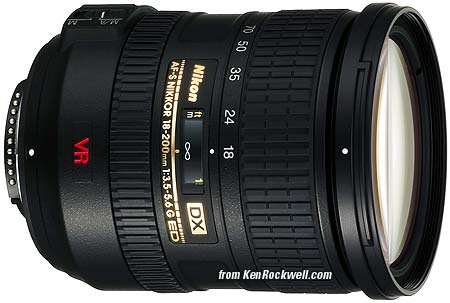


When I started photography 2 years ago, having one was just a "dream". Starting at PhP 40,000 a piece, a hard to find glass (some had to wait for months), there was no way I could fit this is in my silly budget. I had to let go of this "dream lens" and got an Nikon 18-70mm f/3.5-4.5G AF-S instead.

Then the 13th month bonus came....

After getting a good deal from a PiPho member (almost half the price), together with my buds Meng and Jama$$, we ventured out to Anawangin to do a field test using this "all-in-one" lens.
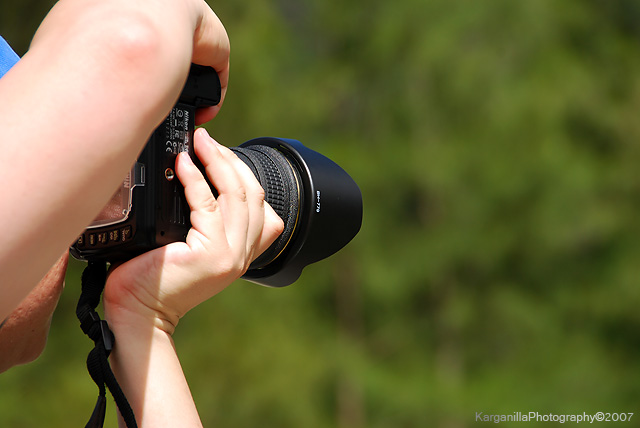

First few "pitiks" and got an amazing bokeh:


Saturation/Contrast


I felt I was in "Neverland", actually "Nikkorland". For newbie photographers like me, having a semi-pro lens, makes one's photography one step easier. The 18mm was wide enough for landscape/cityscapes (as what I am used to with my D70/s kit lens), the 200mm zoom gives me that stretch I need for paparazzi shots. It's ability to changing from wide to zoom in a matter of seconds (without changing lens) makes it one of the most versatile lens in the Nikkor line up.

Next: Field test samples

Review: The All-in-one Nikkor - Part 2

The key for travel photographers is "pack light, carry light, travel light". The additional weight and load will be a hindrance when hiking and travelling. Traditionally, one must have a wide and a mid-tele on 2 separate camera bodies. Or some carry 2 different lens and interchanges them while shooting. The first one adds up to one's load. The latter can prove cumbersome because dust particles can enter the camera and can ruin the outcome of your image. With one 18-200vr mounted on one camera, the photographer can concentrate more on shooting than worrying about dust and others.

Field tests:

Distortion

1/250", F8, ISO 100, Coudy WB,

As with my 18-70 (click for Ken Rockwell review), distortion is noticeable at 18mm wide, as seen on the above example (look at the horizon). As with other standard tele, zooming to 24mm can do the trick, though sacrificing the "wideness". Distortion can be easily corrected in post-processing. So for me, it's not really a major issue. I am saving up for the the AF-S DX Zoom-NIKKOR 12-24mm f/4G IF-ED, which for me is best for landscape, it's UWA (Ultra Wide Angle) with almost no distortion.

Shooting indoor, architecture or anything that requires wide angle-shots, is a different story. You'd better be off using another lens.

Bokeh and sharpness

Both can be done in post-processing, but nothing beats the real thing. True or real bokeh when used properly can help isolate the subect and make it stand-out. Sharpness complements these types of shots. An isolated subject that is not sharp doesn't look right.

The AF-S VR Zoom-NIKKOR 70-200mm f/2.8G IF-ED is the king of Nikkor High Power Zooms for me. It's built like a tank, as heavy as one, costs as much as one, but one hell of a sharp lens. With a fast-fixed 2.8 aperture, the 18-200 is generally no match. I was able to get my hands on one (borrowed) and took this shot below:

70-200vr @ F2.8


Here's a similar shot but taken with my 18-200vr.

18-200vr @5.6


The results maybe similar, but we can't arrive at the conclusion that the 18-200 is as sharp as the 70-200. The photos were taken on different days and time and both were pp'd (a bit) differently. What I am trying to share with you is that the 18-200vr is really sharp and produces nice bokeh. It performs very well on daylight and for me is the perfect lens for mountaineers/backpackers.

Next: Conclusion

Review: The All-in-one Nikkor - Part 3

My Conclusion

In reality an "all-in-one" lens is not possible. Each type of lens has its strenghts and weaknesses. There's not one perfect lens that has it all. Not that I know off. One is strong on one aspect, sacrificing another. As with the 18-200 vr, it's a "wide" and a "tele" in one lens package, but sacrificing speed with a 3.5-5.6 aperture, but compensated it with a vibration reduction. It produces sharp and contrasty images which I really like. It can make the subject stand-out easily with the proper execution of bokeh.


I like its solid built and light weight. The petal hood makes it look good - aesthetically and also serves its purposes against flare and can protect the lens from accidental bumps. The lens creep I can live with (as I have stated in the previous entries).

The distortion is tolerable at 18mm wide open, as I can correct it in post processing. The vignetting at 200mm can also be managed by stepping down 1 to 2 stops (or use photoshop's lens correction feature). The lens creep doesn't bother me, oh, I've said that already.

The Nikon 18-200 VR is one versatile lens that allows any traveller or backpacker to shoot wide and tele without the need to change lens. The Vibration Reduction helps to add 1-2 more f-stops for those low-lit situations. The VR works best for those 200mm paparazzi shots. With VR, the tripod stays at home.

It may not be the best Nikkor lens in the market. But for me, is the best lens for travel photographers who has to "pack light, carry light, travel light".

Cheers!
edwink